
Uncategorized
Finding Ease in a Busy World: How Yijin Jing Uses Stillness to Improve Movement
Jun
Modern life keeps us moving faster than ever.
We sit through meetings, answer endless notifications, work at computers for hours, and spend our free time looking at screens. Despite being constantly occupied, many people feel physically tight, mentally drained, and disconnected from their bodies.
What if the answer wasn’t more activity—but a different quality of movement?
One of the most valuable lessons within Yijin Jing (Muscle and Tendon Transformation Practice) is learning how to create relaxation and awareness through stillness.
Rather than relying on intense workouts or complicated equipment, this traditional practice teaches a simple skill: becoming more present inside your body.
Why Modern Bodies Feel Stiff
Most people assume stiffness comes from a lack of stretching.
While flexibility certainly plays a role, there is often another factor involved.
Long periods of sitting can encourage repetitive movement patterns. The shoulders remain elevated, the chest becomes restricted, and the neck stays fixed in one position for extended periods.
Over time, many people begin to notice:
- Reduced mobility
- Muscle tightness
- Physical tension after work
- Difficulty relaxing
- Reduced body awareness
These experiences are common in modern lifestyles and often have less to do with age and more to do with daily habits.
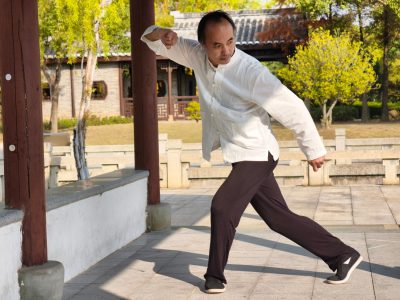
The Yijin Jing Approach
Unlike many exercise systems that emphasize intensity, Yijin Jing focuses on quality.
The goal is not to push harder.
The goal is to move more consciously.
Traditional practice teaches that external stillness can support internal awareness.
When movement becomes slower and more intentional, people often begin noticing areas of unnecessary tension that previously went unnoticed.
This awareness is the first step toward healthier movement patterns.
What Does “Stillness Within Movement” Mean?
At first, the concept sounds contradictory.
How can stillness exist during movement?
In Yijin Jing, stillness refers to the quality of attention rather than the absence of motion.
Your body may be moving, but your breathing remains calm.
Your muscles are active, but your mind is not rushing.
Your posture changes, but your awareness stays steady.
This creates a unique training experience that combines physical movement with mindfulness.
Instead of exercising on autopilot, you become fully engaged with the present moment.
The Role of Breath
Breathing acts as a bridge between the body and mind.
Many people unconsciously shorten their breathing when they feel stressed or distracted.
Yijin Jing encourages slower, more natural breathing patterns that support movement rather than fight against it.
As your attention follows the breath, unnecessary tension often begins to soften.
Movements feel smoother.
Posture becomes more organized.
The body learns to move with greater efficiency.
Small Movements, Meaningful Results
One of the surprising aspects of Yijin Jing is that progress does not require extreme effort.
A simple standing posture practiced with awareness can reveal valuable information about balance, alignment, and breathing.
A slow arm movement can improve coordination and concentration.
A few minutes of mindful practice can become a valuable transition between work and personal life.
The focus is not on achieving a perfect position.
The focus is on developing a better relationship with your body.
Bringing the Practice into Daily Life
The principles of Yijin Jing extend far beyond formal training sessions.
You can apply them while:
- Sitting at your desk
- Walking outdoors
- Standing in line
- Taking a break between meetings
Simply pause for a moment.
Notice your breathing.
Relax your shoulders.
Feel your feet connecting with the ground.
These small moments of awareness help reconnect you with your body’s natural rhythm.
A Simple Five-Minute Practice
Today, try this:
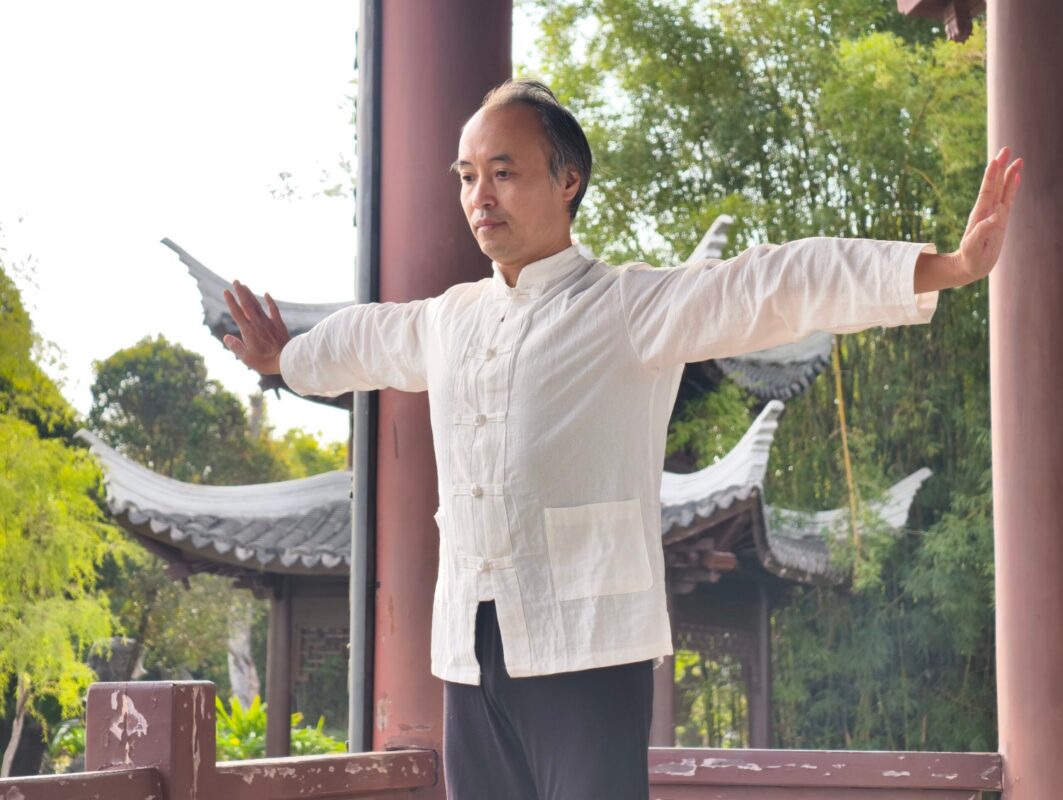
Stand comfortably with your feet shoulder-width apart.
Allow your breathing to settle.
Slowly raise your arms while inhaling.
Lower them while exhaling.
Move at half your normal speed.
Pay attention to the sensations throughout your body.
Rather than trying to achieve something, simply observe.
Many people discover that slowing down creates a sense of ease they rarely experience during the day.
Final Thoughts
Yijin Jing is not about forcing change.
It is about creating the conditions for better movement, greater awareness, and a healthier relationship with your body.
In a world filled with constant stimulation, the ability to find calm while moving may be one of the most valuable skills we can develop.
Sometimes the path to feeling better begins not with doing more—but with paying closer attention to what is already happening inside us.
Eon Zhi
Senior Instructor, Yijin Jing & Xisui Jing
